
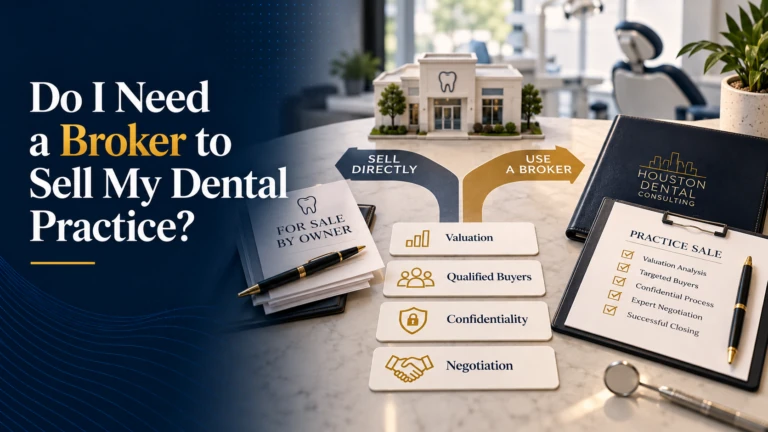
No, you do not generally need a broker to sell your dental practice. You can sell directly to another dentist, an associate, or a dental service organization (DSO). However, a dental practice broker can help determine your practice’s value, find qualified buyers, protect confidentiality, and negotiate the sale.
The right choice depends on whether you already have a buyer, how complex the transaction is, and how much time you can spend managing it. Houston Dental Consulting helps practice owners understand their selling options and prepare for important ownership decisions.
Table of Contents
What Does a Dental Practice Broker Do?
A dental practice broker helps owners manage the sale, from setting an asking price to coordinating the transaction.
A broker’s main responsibilities include:
- Practice valuation: Reviewing annual collections, profitability, equipment, goodwill, and local market conditions.
- Buyer identification: Marketing the practice and connecting sellers with financially qualified dentists or DSOs.
- Confidentiality: Using non-disclosure agreements (NDAs) before sharing sensitive business information.
- Negotiation: Comparing offers, discussing payment terms, and coordinating with legal and financial advisors.
- Sale coordination: Helping buyers and sellers manage due diligence, financing, and closing requirements.
Broker services vary by firm. Ask which responsibilities are included before signing an agreement.
When Should You Hire a Dental Practice Broker?
Hiring a dental practice broker makes sense when you need professional support finding buyers, evaluating offers, or managing a complicated transaction.
1. You Don’t Have a Qualified Buyer
A broker can introduce your practice to prospective buyers through professional networks and confidential listings. This is particularly useful when you want to reach multiple interested dentists rather than negotiate with the first person who contacts you.
2. You Need Help With Valuation and Negotiation
An asking price should reflect the practice’s financial performance, patient base, goodwill, equipment, and operating expenses.
Getting a professional dental practice valuation in Houston helps establish a defensible price before negotiations begin.
3. You’re Considering a DSO Offer
DSO transactions can involve cash payments, retained ownership interests, performance-based payments, and post-sale employment agreements.
A broker or qualified transaction advisor can help compare these terms so you understand what you receive at closing and what depends on future performance.
Can You Sell Your Dental Practice Without a Broker?
Yes, selling a dental practice without a broker is a practical option when you already have a qualified buyer and experienced professional advisors.
Independent sales are often worth considering when:
- An associate dentist wants to purchase the practice.
- A partner or colleague has expressed serious interest.
- Both parties agree on a reasonable valuation.
- You have an attorney and CPA experienced in dental practice transactions.
You will still need to coordinate financial disclosures, buyer financing, negotiations, and sale documents.
For a broader explanation of the transaction, review our guide on how to sell a dental practice in Houston.
Dental Practice Broker vs. Selling Yourself: Key Differences
The main differences between a brokered sale and an independent sale involve costs, buyer access, time, and responsibility.
| Factor | Using a Broker | Selling Yourself |
|---|---|---|
| Commission | Brokerage fee applies | No brokerage fee |
| Finding buyers | Broker helps | Owner handles |
| Valuation | May be included | Arranged independently |
| Confidentiality | Broker coordinates | Owner manages |
| Negotiation | Broker assists | Owner and advisors negotiate |
| Time commitment | Less administrative work | More direct involvement |
Neither approach guarantees a higher sale price. Compare the money you expect to keep after selling, not just the initial purchase offer.
How Much Does a Dental Practice Broker Charge?
Dental practice brokers commonly charge a negotiated commission based on the final sale price. The percentage varies by firm, practice value, services, and transaction complexity.
For example, consider a practice selling for $1 million:
- At 8% commission, the broker fee is $80,000.
- At 10% commission, the broker fee is $100,000.
- At 12% commission, the broker fee is $120,000.
These figures illustrate possible fees, not a standard industry rate.
Before hiring a broker, ask about minimum fees, upfront charges, exclusivity periods, cancellation terms, and when commission becomes payable.
A brokered sale can be worthwhile when the services and transaction outcome justify the expense. However, higher offers do not automatically mean higher proceeds after commissions, taxes, and other costs.
What Are the Risks of Selling Without a Broker?
Selling independently gives you more control over the process but also creates four important responsibilities.
- Pricing accurately: An unrealistic asking price can discourage buyers or reduce your proceeds.
- Finding qualified buyers: Interested dentists may not have the financing required to complete the purchase.
- Protecting confidentiality: Sharing financial or patient-related information without proper safeguards can create legal and business risks.
- Negotiating sale terms: Poorly structured agreements can affect payment, lease arrangements, and your responsibilities after closing.
These risks can be managed with appropriate preparation and professional support. A broker helps with several of these tasks but does not replace legal or accounting advice.
Do You Still Need a Lawyer and CPA to Sell?
A dental transaction attorney and an experienced CPA remain valuable even when you sell without a broker.
Your attorney reviews the purchase agreement, lease assignment, restrictive covenants, and other legal obligations. A CPA evaluates financial records, tax consequences, and the proposed allocation of the purchase price.
A valuation specialist can independently assess the practice’s worth.
The American Dental Association’s guidance on selling a practice also recommends assembling qualified professionals and preparing financial documents before completing a sale.
Should You Use a Dental Practice Broker in Houston?
Choose your selling approach by answering three questions:
- Do you already have a financially qualified buyer?
- Do you know your practice’s realistic market value?
- Can you manage negotiations, due diligence, and the transition while treating patients?
Professional representation may be valuable when several answers are no.
Houston Dental Consulting can help you review your situation and understand the steps involved before deciding how to proceed.
Final Thoughts
You can sell your dental practice without a broker, particularly when you already have a buyer and reliable legal and financial support. A broker becomes more useful when you need broader buyer access, confidential marketing, or help managing complex negotiations.
Considering selling your practice? Contact Houston Dental Consulting to discuss your goals and explore your next steps before entering a sale agreement.
Frequently Asked Questions
Q. Is a dental practice broker legally required?
A broker is generally not required to sell a dental practice. However, transaction-specific legal and licensing requirements should be reviewed with a qualified attorney.
Q. Can I sell my dental practice directly to another dentist?
Yes. You can negotiate a direct sale with another dentist, provided both parties complete the necessary financial, legal, and ownership-transfer requirements.
Q. Who pays the dental practice broker’s commission?
The seller commonly pays the broker’s commission from the sale proceeds. The actual payment obligation depends on the brokerage agreement.
Q. Is hiring a dental practice broker worth the cost?
A dental practice broker may be worth the cost when you need help finding qualified buyers, negotiating offers, protecting confidentiality, and managing a complex sale.
Q. What is the best way to sell a dental practice without a broker?
Start with a professional practice valuation, find a financially qualified buyer, and hire a dental transaction attorney and CPA to manage legal documents, taxes, and due diligence.